ON AIR: +256781517228 | +256752988955  |  DOWNLOAD OUR APP


KAMPALA — Fuel prices are rising sharply in Uganda’s border districts such as Tororo, Busia and Arua, leaving motorists facing long queues and empty pumps, even as government insists national fuel stocks remain stable. 

Officials say the spike is being driven by a combination of cross-border demand, supply delays, fuel diversion within the region and what some describe as opportunistic behaviour in the distribution chain.

Here are the key reasons behind the increase: 

One of the biggest drivers is increased demand from neighbouring countries.

Motorists and traders from Kenya, the Democratic Republic of Congo and South Sudan are crossing into Uganda to buy fuel, attracted by relatively lower and more stable prices.

“Fuel prices in Kenya are higher than in Uganda, so those at the border have taken advantage by crossing to the Ugandan side to buy fuel,” said Julius Odiye, Speaker of Malaba Town Council.

In eastern DRC, fuel prices are often significantly higher due to transport costs and insecurity, while in South Sudan prices can rise even further, often exceeding Shs7,000–Shs9,000 per litre, due to heavy reliance on imports and weak supply chains.

2. Price Differences

Kenya’s regulated fuel prices range between roughly Shs4,900 and Shs6,000 per litre for petrol and Shs4,500 to Shs5,600 for diesel, with prices rising further in remote areas. 

In contrast, Uganda’s prices are more stable, averaging about Shs4,900 to Shs5,400 for petrol and Shs4,500 to Shs5,000 for diesel.

This gap, though modest in some cases, creates strong incentives for cross-border arbitrage.

Even a difference of a few hundred shillings per litre becomes highly profitable at scale, drawing large volumes of buyers into Uganda’s border towns.

3. Delays at Mombasa Port

Supply has also been affected by delays at Kenya’s Port of Mombasa, limiting how much fuel Uganda can bring in at a time when demand is rising.

Kenyan authorities limited the discharge of Uganda’s fuel cargo at the port to agreed handling quotas, allowing only about 58,000 metric tonnes to be offloaded despite the vessel carrying roughly 115,000 metric tonnes.

Officials say the restriction is in line with port scheduling and allocation frameworks, but it has slowed deliveries to inland depots and made it harder for Uganda to meet the surge in demand triggered by traders and motorists from neighbouring countries.

As a result, even with adequate national stocks, supply pressure is being felt more sharply in border regions.

4. Fuel Swapping 

Authorities and industry sources have also pointed to fuel swapping within regional supply networks as a contributing factor.

In earlier investigations, sources said some oil marketing companies have diverted or swapped fuel allocated for Uganda into Kenya, where margins can be higher.

“Yes, it was a very sad incident,” a government source said previously.

“Imagine we are struggling to maintain adequate supply of fuel for the Ugandan market while companies are looking for ways of making more money in the region,” the source added.

Such practices, combined with cases where fuel meant for retail is redirected through commercial channels, reduce volumes reaching local pumps.

5. Hoarding and Opportunistic Pricing

Officials say some smaller dealers and retailers are also holding back fuel in anticipation of higher prices.

“Some petrol station owners are doing this deliberately to benefit from the crisis, but this is not fair,” said Albert Amula, Deputy RDC of Tororo. 

The Uganda National Oil Company (UNOC) says its supply prices have not increased, raising concerns about unjustified retail price hikes.

National Supply

Despite the localized shortages, Ugandan officials say the overall fuel position remains stable.

As of April, Uganda held about 70.5 million litres of petrol (19 days of cover), 43.2 million litres of diesel (12 days) and 32 million litres of jet fuel (53 days).

Uganda consumes about 2.3 million litres of petroleum products daily and relies entirely on imports routed through Kenya and Tanzania.

Officials say the current situation is less about national shortages and more about how fuel is distributed and accessed at the local level.

Energy Minister Ruth Nankabirwa recently said the supply system, coordinated by UNOC and supported by global trader Vitol, has helped maintain stability by sourcing fuel from multiple global markets.

By ChimpReports

The Uganda Communications Commission (UCC) has directed telecommunication operators to block 500 websites found to be distributing pornographic content. This was revealed by UCC Head of Public and International Relations Ibrahim Bbossa while speaking to reporters at the Uganda Media Centre in Kampala. “Following issuance of our notice to the telecommunication operators on 2nd April this year, telecommunication operators have confirmed the blockage of 500 sites that have been distributing pornography,” Bbossa said.  

Bbossa said the commission had received numerous complaints about the spread of pornographic material to vulnerable groups, particularly children, across both telecommunication and broadcasting platforms in Uganda.

He said the UCC is legally empowered to take such action. 

“The commission is mandated under Section 10 of the Uganda Communications Act, Cap 103, to set standards to monitor and enforce compliance in relation to contents,” he said.

Bbossa added that Section 33 of the same Act further empowers the commission to enforce minimum broadcasting standards as outlined in Schedule Four, which explicitly “prohibit the broadcast of content that is contrary to morality” and require that adult-oriented programmes are appropriately scheduled. He noted that the Uganda Communications Content Regulations of 2019 reinforce these provisions, and that other national laws also address the matter. “There are also other laws of Uganda, like the Penal Code Act in Chapter 14, also providing for offences against morality and the protection of children from exploitation and exposure to pornography in any form, especially forms of mental, ethical and moral exploitation,” Bbossa said.

by ChimpReports

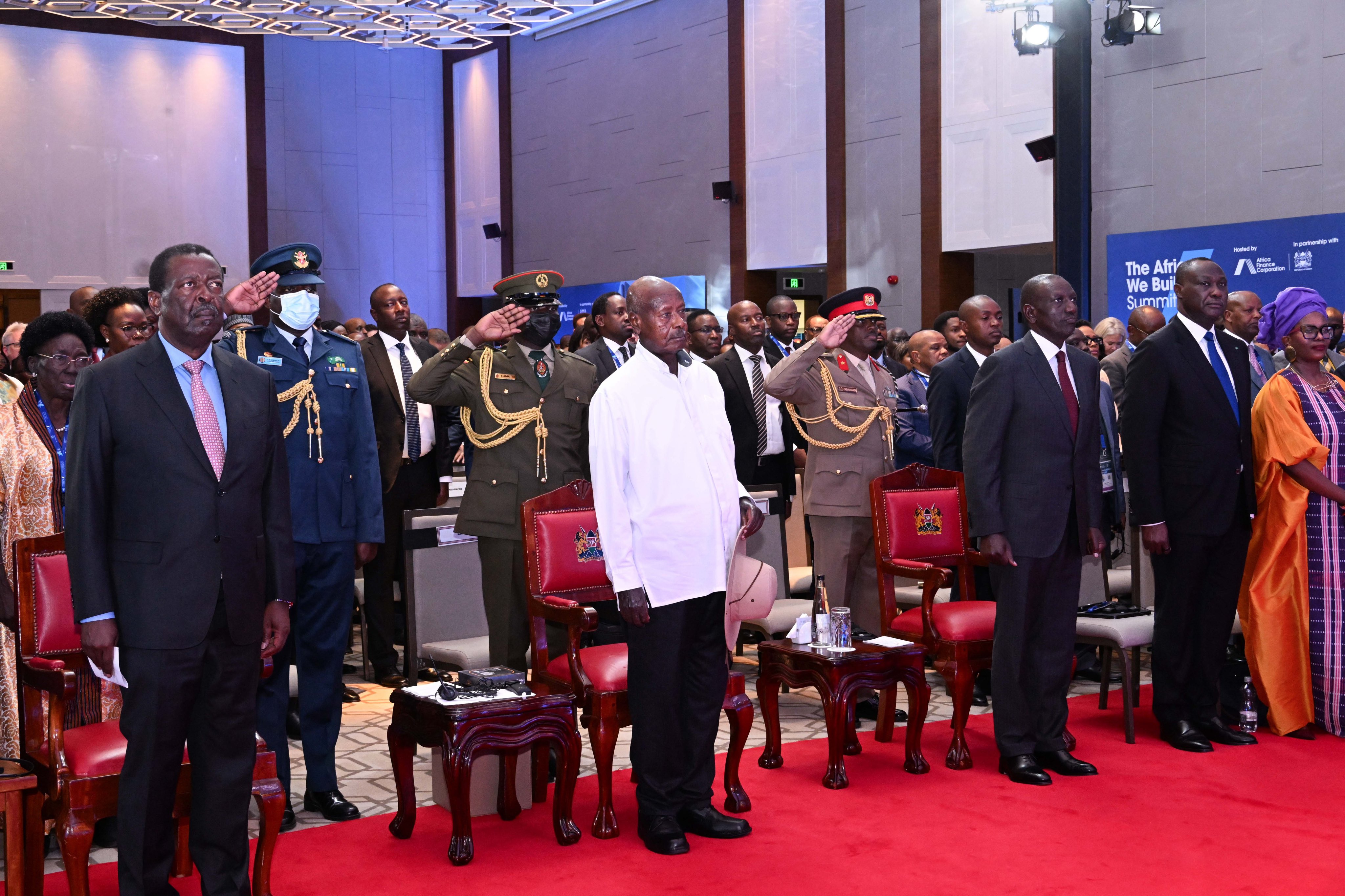
President William Ruto has lauded President Yoweri Museveni for safeguarding Uganda’s oil reserves against exploitation, saying the Ugandan leader rejected pressure to make “easy choices” that would have hurt the country. 

Speaking on Wednesday at the Africa We Build Summit 2026 in Nairobi, Ruto recalled a private conversation he once had with Museveni before becoming president, when Uganda’s oil project had stalled for years.

“I want to thank President Museveni for refusing to accept easy choices,” Ruto told delegates. Adding: “He had a choice to allow the oil in Uganda to go the way others would have wanted.”

The Kenyan leader recounted asking Museveni about the delayed oil plans during a visit to Uganda.

“I asked him, ‘Mzee, what’s going to happen about the oil reserves that you have, because it’s taken time,’” Ruto said.

Museveni’s response, according to Ruto, was blunt and memorable: “Look, young man, then I wasn’t even president. He told me, ‘You see, some of these people you see here, if we give them a chance, they will sell this oil at a throwaway price and go and buy perfume.’ Those were his words and they have never left my mind.”

Ruto said Museveni’s stance was a lesson against shortcuts that risk national interests. “You know a case of people making shortcuts, easy decisions and in the process sabotaging the destiny of a nation and a region,” he added.
He said the summit offered a platform to rethink how Africa manages its resources.

“I am happy that we will be discussing how we are going to use our resources, whether it is the oil that we have in our region or the minerals we have in our region, not to export to others as raw materials.”

Uganda discovered commercial oil reserves in 2006 in the Albertine Graben but production has faced repeated delays over infrastructure, financing, and agreements. The East African Crude Oil Pipeline, running from Hoima to Tanzania’s Tanga Port, is expected to deliver first oil in the coming years.

Ruto’s remarks underscored growing calls among African leaders to prioritize value addition and protect strategic resources for long-term regional benefit.

By ChimpReports


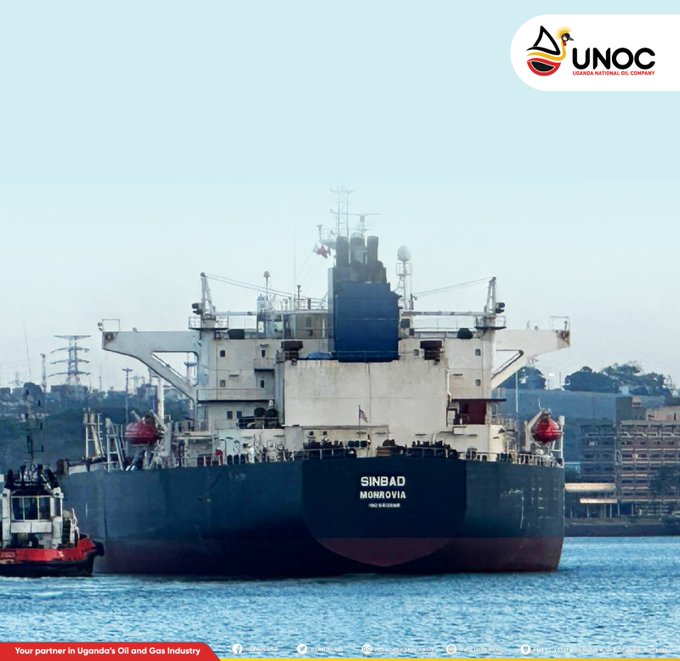
The Government of Uganda has announced that a fuel vessel carrying approximately 120 million litres of petroleum products is scheduled to dock at Port of Mombasa on Wednesday, April 15, in a move aimed at reinforcing national fuel reserves and sustaining supply. 

In a joint statement issued on Tuesday, the Uganda National Oil Company and the Ministry of Energy and Mineral Development said the shipment—estimated at about 119 million litres—will bolster stock levels and ensure continued availability of petroleum products across the country.

“We are pleased to inform the public that another fuel vessel is expected at Mombasa Port on Wednesday, delivering an additional 119 million litres of fuel,” the statement said.

“This shipment will further strengthen national fuel reserves and ensure continued availability across the country.”

The reassurance comes amid heightened sensitivity in regional fuel markets, triggered by U.S.-Iran conflict and eventual closure of the Strait of Hormuz through which 20% of global oil passes.


Uganda’s supply stability has largely been supported by UNOC’s centralized import system and its partnership with Vitol, which sources fuel from multiple global markets to cushion against disruptions such as those affecting the Middle East.

The Energy Ministry said they were working around the clock to maintain adequate stocks and prevent disruptions despite external pressures affecting global oil markets.

On pricing, the government noted that pump costs continue to be shaped by international dynamics, including geopolitical tensions involving the United States, Israel and Iran.

However, authorities stressed that safeguards are in place to cushion consumers.

“Government wishes to assure all Ugandans that pricing trends are being closely monitored, and measures are in place to ensure that fuel prices remain within reasonable and manageable levels,” the statement added.

The public has been urged to remain calm and avoid panic buying, with officials reiterating that supply remains steady and sufficient.

Uganda consumes an estimated 2.3 million litres of petroleum products daily and relies entirely on imports routed through Kenya and Tanzania, making efficient logistics and timely shipments critical to national energy security.

Government said the arrival of the latest consignment underscores the government’s continued commitment to safeguarding fuel availability, even as volatility persists in global oil markets.

By ChimpReports


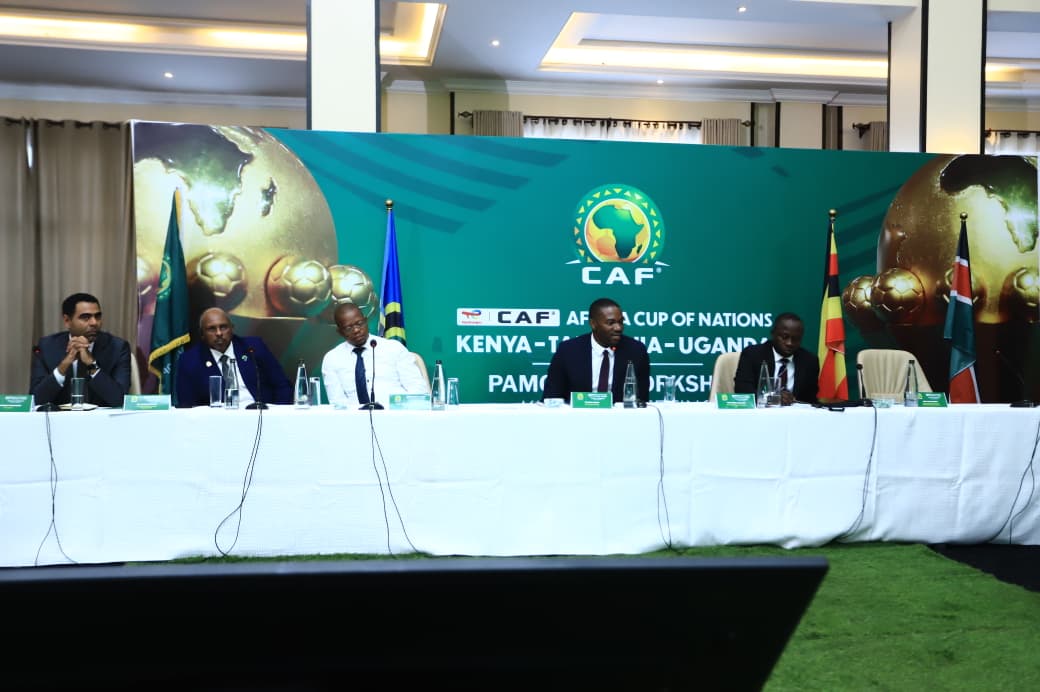
KAMPALA — Leaders from across East Africa have reaffirmed their commitment to delivering a successful and historic 2027 Africa Cup of Nations as a high-level workshop opened in Kampala, bringing together key stakeholders from government, football federations, and continental bodies. 

The meeting convened officials from Uganda, Kenya, and Tanzania—the joint hosts under the PAMOJA bid—alongside representatives from the Confederation of African Football, all focused on coordinating preparations for the continent’s biggest football tournament.

Uganda’s State Minister for Sports, Peter Ogwang, described the tournament as a defining moment for the region, pledging full government support toward its successful delivery. “AFCON 2027 is a historic opportunity for East Africa,” Ogwang said, adding that partner states are committed to mobilising the resources required to meet CAF standards.

He also pointed to the successful hosting of the African Nations Championship as evidence of the region’s growing capacity to organise major competitions.

Moses Magogo, president of the Federation of Uganda Football Associations, emphasised that the tournament’s impact will extend beyond football.

“This is not just about the game—it is about regional integration and development within the East African Community,” Magogo said, noting that while the region may have lacked opportunities in the past, it has always had the capability.

From Kenya, Hussein Mohammed, president of the Football Kenya Federation, urged stakeholders to think beyond the tournament itself and focus on long-term legacy.

Meanwhile, Wallace Karia of the Tanzania Football Federation stressed the need for urgency and discipline, warning that key milestones must be met on schedule to allow sufficient time for final preparations.

Delivering a candid assessment, Samson Adamu noted that AFCON presents a significantly larger organisational challenge compared to CHAN.

“AFCON is a much bigger competition. It requires a shift in mindset and stronger coordination,” Adamu said, urging stakeholders to define roles clearly and work in close collaboration given the limited time available.

He also highlighted the tournament’s economic potential, citing the impact of previous AFCON editions, and described the 2027 event as a major opportunity for East Africa to showcase its unity, capacity, and global appeal.

The workshop marks a critical step in aligning the three host nations as preparations intensify for what is expected to be a landmark tournament for the region.

By ChimpReports


Fuel prices are rising sharply in Uganda’s border districts such as Tororo, Busia and Arua, leaving motorists facing long queues and empty pumps, even as government insists national fuel stocks remain stable. 

Officials say the spike is being driven by a combination of cross-border demand, supply delays, fuel diversion within the region and what some describe as opportunistic behaviour in the distribution chain.

Here are the key reasons behind the increase: 

One of the biggest drivers is increased demand from neighbouring countries.

Motorists and traders from Kenya, the Democratic Republic of Congo and South Sudan are crossing into Uganda to buy fuel, attracted by relatively lower and more stable prices. 

“Fuel prices in Kenya are higher than in Uganda, so those at the border have taken advantage by crossing to the Ugandan side to buy fuel,” said Julius Odiye, Speaker of Malaba Town Council.

In eastern DRC, fuel prices are often significantly higher due to transport costs and insecurity, while in South Sudan prices can rise even further, often exceeding Shs7,000–Shs9,000 per litre, due to heavy reliance on imports and weak supply chains.

2. Price Differences

Kenya’s regulated fuel prices range between roughly Shs4,900 and Shs6,000 per litre for petrol and Shs4,500 to Shs5,600 for diesel, with prices rising further in remote areas.In contrast, Uganda’s prices are more stable, averaging about Shs4,900 to Shs5,400 for petrol and Shs4,500 to Shs5,000 for diesel.

This gap, though modest in some cases, creates strong incentives for cross-border arbitrage. 

Even a difference of a few hundred shillings per litre becomes highly profitable at scale, drawing large volumes of buyers into Uganda’s border towns.

3. Delays at Mombasa Port

Supply has also been affected by delays at Kenya’s Port of Mombasa, limiting how much fuel Uganda can bring in at a time when demand is rising.

Kenyan authorities limited the discharge of Uganda’s fuel cargo at the port to agreed handling quotas, allowing only about 58,000 metric tonnes to be offloaded despite the vessel carrying roughly 115,000 metric tonnes.

Officials say the restriction is in line with port scheduling and allocation frameworks, but it has slowed deliveries to inland depots and made it harder for Uganda to meet the surge in demand triggered by traders and motorists from neighbouring countries. 

As a result, even with adequate national stocks, supply pressure is being felt more sharply in border regions.

4. Fuel Swapping 

Authorities and industry sources have also pointed to fuel swapping within regional supply networks as a contributing factor.

In earlier investigations, sources said some oil marketing companies have diverted or swapped fuel allocated for Uganda into Kenya, where margins can be higher.

“Yes, it was a very sad incident,” a government source said previously.

“Imagine we are struggling to maintain adequate supply of fuel for the Ugandan market while companies are looking for ways of making more money in the region,” the source added.

Such practices, combined with cases where fuel meant for retail is redirected through commercial channels, reduce volumes reaching local pumps.

5. Hoarding and Opportunistic Pricing

Officials say some smaller dealers and retailers are also holding back fuel in anticipation of higher prices.

“Some petrol station owners are doing this deliberately to benefit from the crisis, but this is not fair,” said Albert Amula, Deputy RDC of Tororo.

The Uganda National Oil Company (UNOC) says its supply prices have not increased, raising concerns about unjustified retail price hikes.

National Supply

Despite the localized shortages, Ugandan officials say the overall fuel position remains stable.

As of April, Uganda held about 70.5 million litres of petrol (19 days of cover), 43.2 million litres of diesel (12 days) and 32 million litres of jet fuel (53 days).

Uganda consumes about 2.3 million litres of petroleum products daily and relies entirely on imports routed through Kenya and Tanzania.

Officials say the current situation is less about national shortages and more about how fuel is distributed and accessed at the local level.

Energy Minister Ruth Nankabirwa recently said the supply system, coordinated by UNOC and supported by global trader Vitol, has helped maintain stability by sourcing fuel from multiple global markets.

By ChimpReports
The Office of the Director of Public Prosecutions has sanctioned four murder charges against Christopher Okello Onyim over last week’s killing of four children at a daycare centre in Ggaba, a Kampala suburb.

Onyim appeared on Tuesday before the Chief Magistrates’ Court in Makindye, where the charges were read to him following the April 2 attack at Ggaba Early Childhood Development Centre in Makindye Division.

According to the charge sheet, prosecutors allege that Onyim, “with malice aforethought,” unlawfully caused the deaths of Eteku Gideon, Keisha Agenorwoth Otim, Sseruyange Ignitius and Odeke Ryan.

He was remanded to prison until April 8, when the matter will return to court for mention. 

The prosecution is being handled by Chief State Attorneys Jonathan Muwaganya and Anna Kiiza, appearing before Senior Magistrate Grade I Nanjala Aidah.

Under Ugandan law, murder cases are tried by the High Court, meaning the Makindye court will only handle preliminary proceedings before the file is committed for trial. 

The charges follow a brutal attack at a daycare centre in Ggaba that has left the country in shock and mourning. Police have said Onyim, a returnee who had lived in the United States for more than 20 years, is believed to have first visited the school posing as a parent before returning to carry out the attack.

The incident has raised serious concerns among parents and education authorities about safety in early childhood centres, particularly the screening of visitors and access control.

Families of the victims continue to grieve as the case begins its journey through the courts, with many Ugandans now looking to the justice system for answers and accountability.

Authorities say investigations are still ongoing, even as prosecutors prepare to present evidence in one of the most disturbing child-killing cases in recent years.

By ChimpReports